
Work / Construction Supervision & Management
Heritage Buildings Restoration
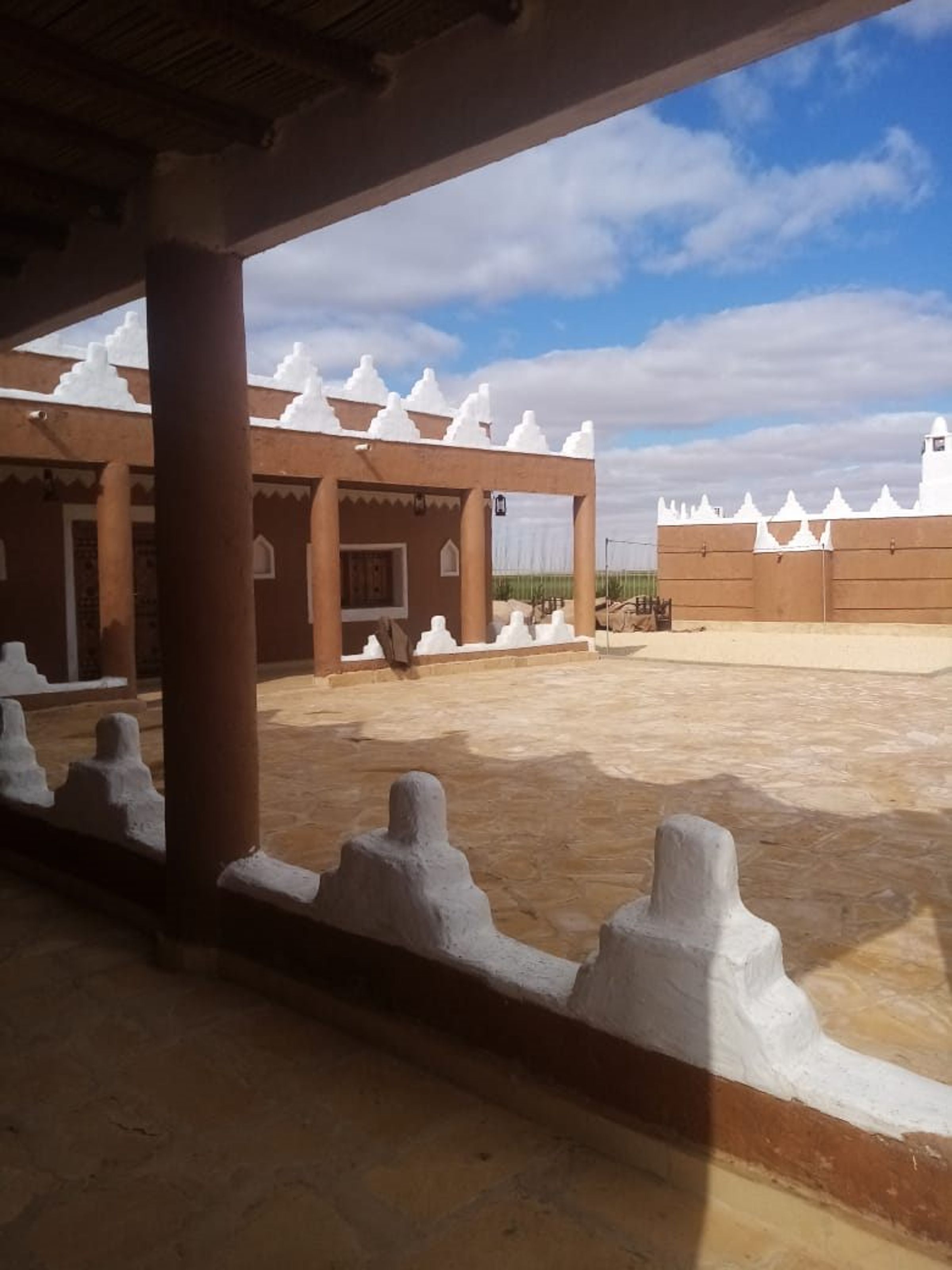
A Najdi mud-brick compound restored through precise material reinstatement, returning its courtyard arcades and crenellated parapets to authentic form.
- Location
- Riyadh, Saudi Arabia
- Our role
- Restoration and construction of heritage buildings
About this project
The compound follows the spatial logic of traditional Central Arabian vernacular: an inward-facing plan organised around a sandstone-paved courtyard, enclosed by deep-set arcades (riwaq) carried on heavy earthen columns. Mud-brick walls rise to crenellated parapets finished in white lime wash — the shurufat silhouette characteristic of Najdi fort and domestic architecture. Openings are small and deeply recessed, calibrated against the intense solar exposure of the Riyadh plateau.
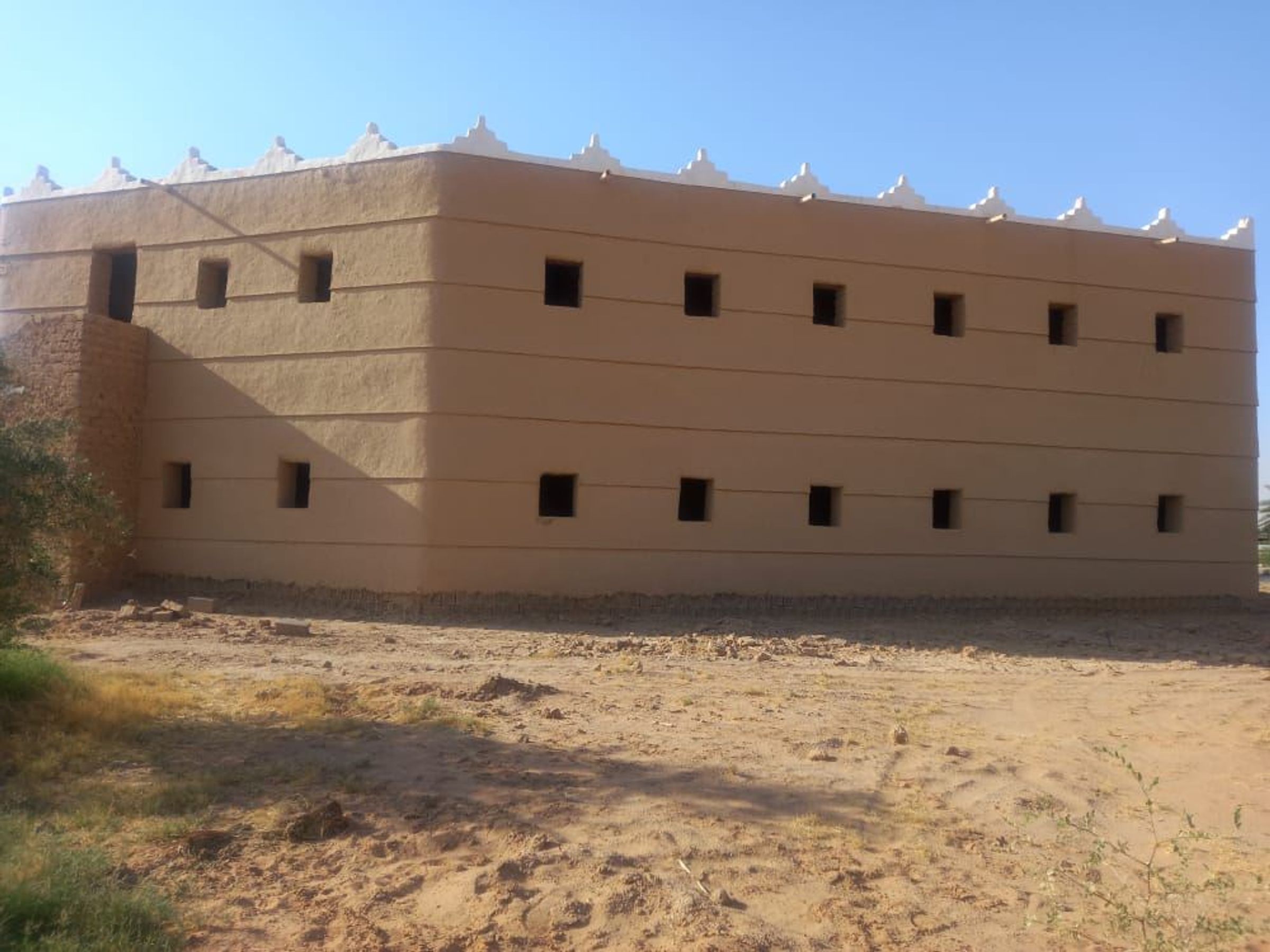
The arid desert setting, visible in all three images, frames the scale of the challenge. Extreme diurnal temperature swings, low humidity, and wind-driven sand accelerate the erosion of earthen and lime surfaces. The strategy of working in earth plaster, coursed sandstone, and lime rather than substituting modern cementitious materials reflects an understanding that compatible replacement is fundamental to the long-term stability of the fabric.
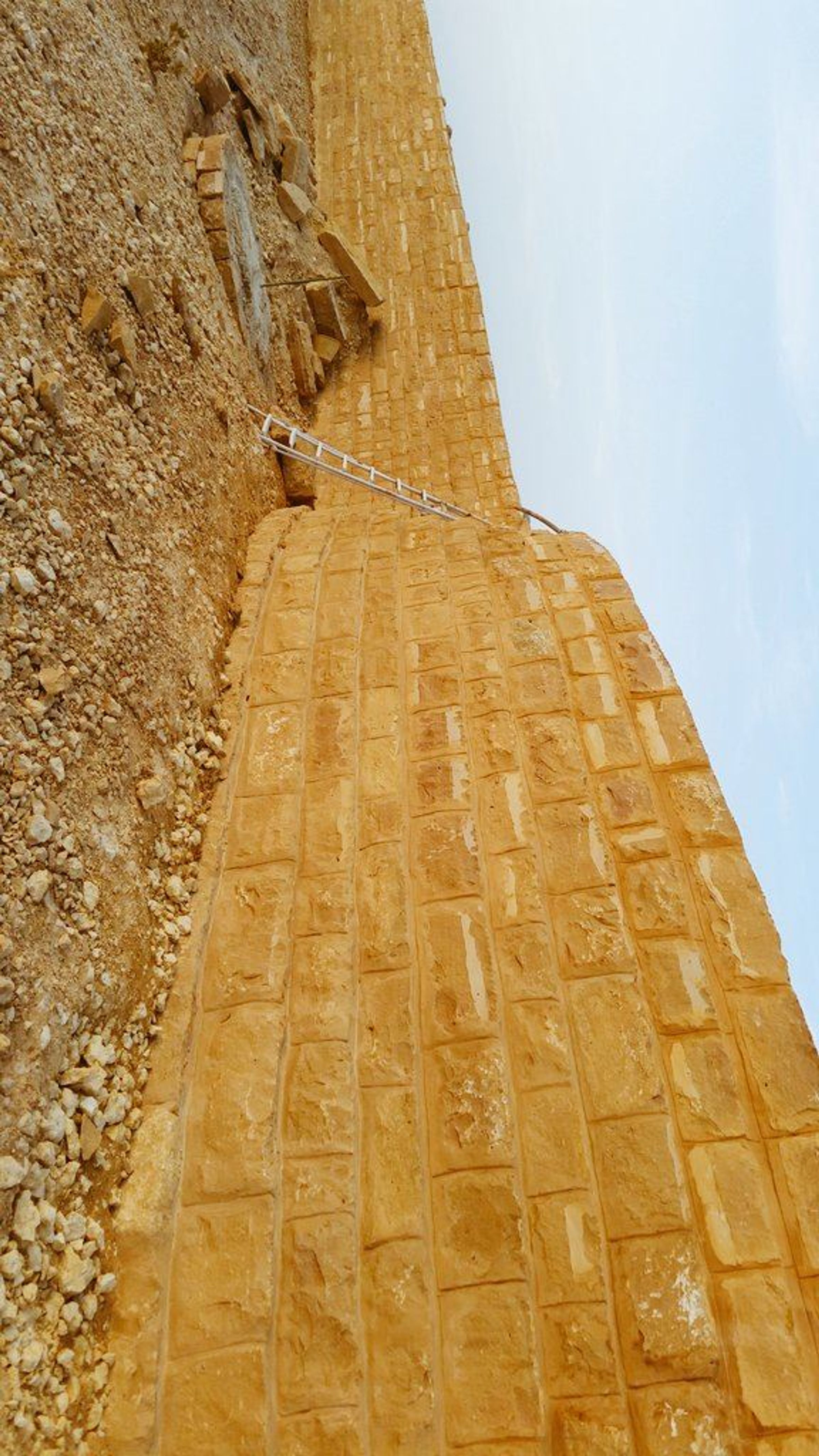
Pioneer Landmarks provided construction supervision and management across the restoration and reconstruction works. The scope is visible in the images: re-plastered and re-banded mud-brick façades on the multi-storey block, re-faced sandstone masonry on an exposed tower or boundary element, and reinstated arcade and courtyard paving — each intervention documented against the original material palette rather than reworked as pastiche.
Every view
More in Construction Supervision & Management
Considering a project like this?
Start a conversation